Showing posts with label america. Show all posts

Wednesday, November 30, 2016

What The Election of 1952 Tells Us About Social Media's Failure

What The Election of 1952 Tells Us About Social Media's Failure to Grow Political Influence of the Average American

In 1952, the United States elected in a landslide the first Republican President in 20 years. How he arrived at that role is more fascinating than what he did when he got there.


POLITICS VS. PUBLIC SERVICE

In 1952, long before computers and social media, and for some, long before television - there was a social campaign underway. It was the Draft Eisenhower campaign, and it was the first successful political draft of the 20th Century.

Eisenhower stated many, many times that he didn't want to run for President. He was content as a general and hero of WWII. Even President Truman, convinced that Eisenhower would run as a Democrat, tried to press him to run, all the while he replied with a resounding "no".

So people who believed he would be a great President tried a different approach - they would get the people to demand it.

This was a different era - politics was still seen as a "public service", that Eisenhower himself said he would not feel comfortable turning down if the American People determined he would be the best man for the job.

So how would they be able to convince a man, in a era with no social media or quick communication, that the people wanted him?

I LIKE IKE

The TV show Mad Men outlines some pretty impressive old school marketing tactics. They likely didn't mention that the very type of marketing they described was used to help elect a President.

"I Like Ike" (named after Eisenhower's nickname, Ike), was a grassroots movement that became a symbol of the efforts to drive Eisenhower to run - developed by a marketing businessman who later became Secretary of Commerce under Nixon. It was launched in 1951 by a few Republican Governors and Senators, but was fueled by a citizenry who was passionately in favor of America's last wartime hero who purchased the merchandise like candy.

Still, Eisenhower rejected calls to run. Instead, the Democrats and Republicans were still moving forward with their candidates as expected.

Then, in January of 1952, Eisenhower's name was added to the New Hampshire Republican Primary - without his permission and with no marketing or fanfare.

24 Newspapers soon endorsed Eisenhower, including the New York Times, despite having not announced a bid to run. Millions of Americans purchased I Like Ike paraphernalia (sounds like Make America Great Again hats of 2016), driving forward the notion that "Ike" was the people's candidate.

"SERENADE TO IKE"

Even with all of this, Eisenhower didn't believe the hype. He thought the media was exaggerating. After all, you couldn't track likes and metrics in 1952. How did he know it wasn't just the elites pressuring him?

The I Like Ike movement held a massive rally in Madison Square Garden - at the time a capacity of 16,000 - and 25,000 Americans showed up to show their support, refusing to leave even when the Fire Marshall asked them to leave. Famous businesswoman and aviator Jacqueline Cochran flew to Paris a few days later to show Eisenhower Serenade to Ike, a tribute film she had made - ending with a toast "To the President of the United States.

Then, in March, having not campaigned or spent any money, Eisenhower beat his Republican Primary opponent Robert A. Taft 50% to 38% in the New Hampshire primary (his opponent had spent precious time and money there). A few days later, he received 106,000 write in votes (some as Isenhowr or just "Ike") in Minnesota, only 20,000 behind the on-ballot candidate in the State.

Eisenhower was now convinced - the people did want him. The movement was real. The rest, as they say, is history.


SOCIAL MEDIA'S POTENTIAL

Social Media is often praised as a way to connect people. A way to deliver ideas more rapidly. Some argue so far as to say that Social Media has reshaped the political climate, and led to major changes in how politicians campaign, how entertainers entertain, and how people interact.

People will cite the ability of "sharing" memes and statuses throughout the internet, which can garner hundreds of thousands of likes and build a narrative, as evidence that people have more of a voice now than they ever had before.

But how much of that voice is actually reaching its target? How much have Americans really seen their ability to change their fates expand tangibly through Social Media?

In 1952, long before social media, millions proved that Americans as a unified voice could change the Country. 106,000 people woke up in Minnesota and wrote in a candidate who wasn't even on the ballot.

Why was that? Was it because there weren't hundreds of comments on Social Media telling people that their vote was "wasted"? Was it because people were more aware of civics, or just more willing to be involved? Was it because people had to communicate more in person, and thus ideas could still permeate in a very different way?

Even with social media and ubiquitous TV sets, third party candidates, let alone "drafted candidates", have immense trouble raising awareness.

People will argue that Ike had the establishment behind him, so of COURSE it was easy for the idea of him running could permeate - today, the establishment holds back independent ideas. But therein lies the problem - the promise of social media was supposed to be independent information.

How is social media useful, if it can't even evolve our ability to communicate and affect change beyond what we could 60 years ago?

WHAT WENT WRONG?

In 1952, the American People, sparked by an idea, fueled an 8-year Presidency. Today, ideas are generated on social media every single day, but are unable to gain traction. Those that do, are polarized and dismissed.

There are hollow echoes of similar activity today - President-Elect Trump's rallies and usage of social media to directly reach the people, being two of them - but they are often misunderstood and manipulated by those who want to rebrand the messages for their own purposes.

The issue lies in the very nature of social media. The Average American citizen isn't aware - but on things like Facebook and Twitter, THEY are the product. They want users to feel comfortable so that they keep coming back. People don't typically come back if they are challenged - they come back if they see things they agree with.

This is why, today, even though we have the tools as American citizens to do what we did in 1952, without the backing of the establishment - we won't. We can't agree on doing it, let alone how to do it.

Perhaps if civics hadn't been all but abandoned prior to social media's rise, we would see a much different situation. Then again, perhaps even with civic awareness, social media itself is the cause, not the symptom, of the current political disconnect. Would America of 1952 have been more or less likely to nominate Ike if social media had existed back then? Or would everyone have talked each other out of it?

We can never answer that question, but hopefully, with the internet entering it's mature phase and people becoming more aware of fake news, we will start to see a shift back towards awareness - in spite of our own desires to remain in the bliss of our own echo chambers.
------------------------------

Sunday, July 10, 2016

The "Others": Multi-Racial Americans in the Age of Identity Politics

The "Others": Multi-Racial Americans and Identity Politics

For millions of Americans whose race isn't as clear as black and white, identity politics can force an uncomfortable choice. But there is an alternative to division.


I am the "other".

Below Black, White, Asian, Hispanic, at the very bottom of that job or school application, sometimes a loan application - there I am. "Other".

I am the son of a white Irish father and a first generation immigrant Dominican mother. The only thing the two sides of my family had in common when they first met was that they were both Catholic. Now, they still have very little in common, except grandchildren and nieces and nephews.

Racially, this makes me "mixed" (or Other). In a world where wearing your race is a badge of pride, where Brown and Black and White are quickly coming back into style as how you define the quality of your American experience, I have been left in a veritable gray area where standing out means standing against everything I have been brought up to believe.

GREATER THAN THE SUM OF ITS PARTS

Growing up, race meant nothing to me. I was surrounded by people every shade of brown and white from the time I could crawl. People spoke English, Spanish and Spanglish interchangeably. I visited relatives of moderate wealth and relatives of moderate poverty, ranging from New Jersey to the Dominican Republic itself.

The first time I really felt it - "being the other" - was when I started going to friends houses. I went to friends houses of all cultures - black, white, Hispanic, Asian - and the culture in these homes was palpable. When I entered a white person's home, I was never quite white. In a Hispanic person's home, I was never quite Hispanic, either.

So, what was I? My first language was Spanish but I had forgotten most of it, my skin was brown but not that brown, I spent most of my time with my white family and I didn't have an accent. I ate Rice and Beans and Corned Beef. Empanadas and Pot Roast.

It took me years to figure it out, but I was the quintessential result of the melting pot. I was the perfect blend of two cultures, taking what I needed from each and emerging on the other side unscathed. 

Without the ability to associate with either side of my family alone without feeling as though I was missing out on the other half, I grew prouder and prouder of the place which gave me the opportunity to grow up a blend as I did. I no longer identified as a Dominican/Irish mix. I didn't want to just be "other". So I choose another option.

I was American.

YOU ARE EITHER WITH US OR AGAINST US

Since the 90's, identity politics has been taking hold of the national discourse. While I was identifying more and more as an American, everyone else was identifying as one less and less. They substituted their Americanism for a more divided view of the world. The American experience has always been unique for different groups, and people began to identify politically with that experience, rather than driving towards a unified one.

For me, choosing to identify with an identity other than American would mean lying to myself. It would mean that I was choosing one side of my family against another. I loved both cultures, both sides.

Now, as racial tensions seem to be spiking, I am again stuck in a gray area from which there is no escaping. In the America I grew up in, different even from some of my own cousins, all lives have always mattered. I have seen and been impacted by institutional racism, yet simultaneously benefitted from the American Dream.

It is from this perspective that I push for Unity. As a multi-racial American, my very existence depends on and is the result of post-racialism. To try to drive a wedge between different races, to try and divide instead of unite, is the antithesis to not just the life I have lived, but the person I am.

I believe in America and the melting pot because we multi-raced Americans are that melting pot. We are the post-racial America that people dream about.

My family is living, breathing proof that love overcomes all boundaries. Watching my father uncomfortably meander around my Dominican family's home as they all speak Spanish around him wasn't just entertaining, it was a life lesson.

When you love someone, you look past differences. We need to spend less time figuring out what seperates us as races and instead emphasize on what brings us together as humans.

In that way, America has always been a beacon of hope. Because here, people can break down discrimination and drive forward a better future for their children.

It can continue to be that beacon, but only if we finally start to fulfill Dr. King's dream and judge people not by the color of their skin, but the content of their character.

Wednesday, June 15, 2016

Intellectuallenza: The Collapse of Knowledge in America

Intellectuallenza: The Collapse of Knowledge in America

In an increasingly global society, Americans are increasingly ignorant of the rest of the world's history and culture - even as they claim otherwise.


My grandmother is now almost 90 years old. In her life, she has been a teacher, a soldier's wife, a mother to both a lawyer and an alcoholic, a young widow, and a caring grandparent.

One of my favorite parts of sitting down to talk with her is that no matter what topic I seem to bring up, she has input. A story to tell, perhaps. Or knowledge to bestow. Nowhere is this more apparent than our discussions about foreign countries.

News in Turkey? She will go on and on about the collapse of the Ottoman Empire, a bit before her time, and the ensuing Young Turks who took over. China? She can go at length about the personality of the Chinese and how their culture influenced their diversion from Soviet-type communism.

Riots in France? She can tell me at length about how DeGaulle used to handle riots in the streets back in the 50's. 

Some of this knowledge can be attributed to age. After all, as we move through life we tend to absorb knowledge along the way.

However, there is another element to her knowledge, and this element is one that seems to be missing from today's intellectuals. 

IT'S ABOUT WHO YOU KNOW, NOT WHAT YOU KNOW

I have tried to have conversations with my peers similar to those with my grandmother. It falls on ears that are not only disinterested, but often actively repulsed. Younger circles (and not JUST Millennials), even those who consider themselves "intellectuals", simply do not have the same level of historical knowledge as the generations before us. And those of us who do are looked at as know-it-alls or condescending. As though somehow this level of knowledge is aberrant or unnecessary.

From anecdotal evidence, with my teacher in Freshman Year of High School not understanding that an exchange student from Georgia was coming from the country, not the State, to actual statistical evidence of Americans simply not knowing the world around them, it is very clear that there is a brain drain - even as more Americans than ever go to college.

My grandmother was by no means an intellectual. She was a woman who went to college - Douglass College for Women, now part of Rutgers University - which was much rarer back then. But she was not a professional. She didn't remain in academia. She was a stay at home mother of two, dealing with an alcoholic father and son, and a husband who was sick with hemachromatosis.


"Make no mistake, we are producing a highly skilled labor force. We just aren't producing a highly knowledgeable one."


Nonetheless, she has knowledge. It is an old type of knowledge - one that has existed since the beginnings of human civilization - but one that seems to be dying quickly. It goes deeper than just understanding history, or understanding what is going on in other parts of the world.

It is the knowledge of people. The journey of people all around the world from our starting point all the way to where she finds herself now. The full story - the only story - of our legacy on this planet. 

It is a knowledge that doesn't discriminate. It doesn't see a country as unimportant, or a race as un-qualifying. It doesn't see Islam or Christianity or America or Asia with any biases, it simply sees all of these elements and follows them through the ages. 

For all of the faults of the "Greatest Generation" and those prior, they understood their fellow man and woman around the world because they understood where they had come from. 

WHAT IS "OLD KNOWLEDGE"


When we follow a modern saga - say, Star Wars - it isn't a story just of the galaxy and politics (and the movies that tried to be only that were arguably the worst of the group). It was a story about people, a family, love, lust, loss and hate, and their impact on the galaxy as a whole. Understanding these people and how they feel about their surroundings is our eye into the story as a whole.

We seem to have forgotten that history was written by people with their own stories and biases. We have sterilized history of all of the personality, suffocating interest. You don't understand a culture by simply understanding how it's borders changed, or what group of countries it was allied to in WWII. You understand a culture by understanding its people and their experiences.

This is what is so vital about this old type of knowledge. My grandmother's stories were filled with people - either that she met, that she read from, that she knew, that she heard about on the news. It wasn't just for flavor. This is how she learned her history, and about other cultures. 

A textbook can teach you about events. It can't teach you emotion.

There are stories this interesting scattered all throughout our history, sprinkled here and there in matter-of-fact Wikipedia articles for flavor. 

There was a time when these stories were how history moved forward. In fact, up until relatively modern times, telling stories was the primary means of relaying knowledge to the next generation.

As you can imagine, these stories were filled with anecdote and emotion. With people.

So why then today, in a time where we are more connected with the rest of the world than ever before, are Americans so ignorant of it? Why are the cultures of other people being so lost to us, even while we can interact with them at any time?

EDUCATION TODAY IS FOCUSED ON SKILLS, NOT KNOWLEDGE

As much as we like to pride ourselves in the first world that we are sending so many people to college to get an education, I have some bad news for you: we are still sending our kids to school simply to learn a skill or trade. That skill or trade just happens to be different than what it used to be.

While people used to apprentice to be a mason, they now go for 8+ years to school to be a Doctor, coming out "educated" in our eyes but in reality just extremely skilled in one specific sector of our economy.

This is the nature of a capitalist economy. There is nothing wrong with this system, simply how we view it.

Make no mistake, we are producing a highly skilled labor force. We just aren't producing a highly knowledgeable one.

Older generations went to school for trades, but since college wasn't part of the equation, they didn't have any illusions of intellectualism from it. Those who wanted to be educated - to understand the rest of the world - had to seek it out. Many, like my Grandmother, did so.

Today, the pseudo-intellectuals of the nation don't think they need anything else. After all, they are highly educated, right? That is what they spent all of that money for.

I call it "Intellectualenza" - the over-emphasis of higher education as the "ending point", leading to an entire generation of Americans who cal call themselves "higher educated" while not possessing even a third of the knowledge of the generations before them.

CULTURE IS AS CULTURE DOES

Our inter-connectivity to other cultures belies our lack of knowledge of them.

Iran today is a Muslim theocracy. Many people know this. It isn't hard to get in touch with an Iranian either at home or abroad and understand their current perspective.

Few people even know that "Persia" and "Iran" are the same thing, and fewer still can go back and know that Islam wasn't the religion there for a majority of the country's history.

Throughout history, it has been an Ancient Zoroastrian Empire, a Secular Dictatorship, one of the wealthiest parts of the world and also one of the most powerful.

These sorts of marks on a country's history don't simply disappear. The people carry it with them. This type of knowledge helps us in negotiations, in interactions, in empathizing and sympathizing.

Our generation claims to be the harbingers of a new multicultural society - of a global paradise where we can live in harmony. Yet, in the most simplistic test of understanding another culture - knowing it's past - we consistently fall flat.

Those who don't know history are bound to repeat it. Unfortunately for us, I don't think many people even know what it is we are repeating.
----------------------------------------------------------------------------------------------

Monday, November 16, 2015

Paris Fallout: America is Still a Melting Pot - And That is a Good Thing

Paris Fallout: America is Still a Melting Pot - and That is a Good Thing


Coming off of the heels of the most deadly attack in Paris in years, anger-fueled questions have arisen about the role of Muslims and Islam in the Western World. The answers to these questions give us a glimpse into how well the U.S. integrates other cultures into our society - and how despite the naysayers we still stand out as an exemplary global model of success in this regard.

The "melting pot" analogy for the United States goes back over a century, when the world still regarded the U.S as a new promised land for those seeking refuge. It essentially implies a blending of cultures together into a new, distinctly "American" culture that sheds the prejudices of the homelands in favor of freedom.

That all sounds overly-poetic and patriotic, I will admit, which is why many have started to claim that "melting pot" is and always has been an over-simplification and culturally insensitive. Some have taken to calling the United States a "salad bowl", where all of the ingredients are in one place but aren't quite blending together. 

Some even take it a step further and claim that the United States "has no culture". 

However, I would argue that one must look no further than the continuing successful integration of Muslims into American society in order to gain a perspective of just how powerful our culture is, and why the melting pot is still very real - and something we should be proud of.

WHO WERE THE PARIS ATTACKERS

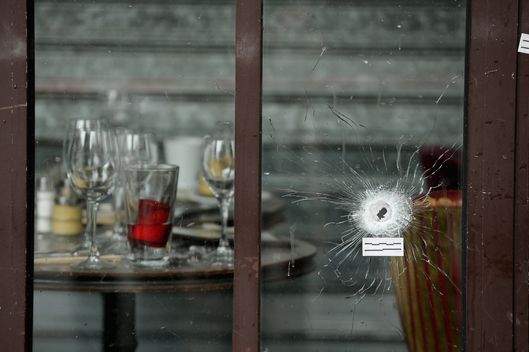
Bullet hole left from the Paris attacks

Friday left over 130 Parisians killed in what were the most deadly attacks on the country since WWII. Eight terrorists struck throughout the night, using a combination of small arms and bombs to instill fear throughout the French capital.

Who were these terrible attackers that could do such a thing to civilians?

Several of the attackers were born in either France or Belgium and had lived there most of their lives. Only a few came as refugees from Syria.

This of course begs the question, as it always does,  how could individuals born and raised in a westernized, comparatively rich nation commit such atrocities on their own people?

This question is, of course, is what leads to anti-Islamic sentiments across nations impacted by terrorism. That fear that your Muslim neighbor, who seems normal, could be hiding a dark secret about planning something terrible. 

The answer to why European-born nationals could commit these crimes is complicated, and it has as much to do with national identity as it does with extremist ideology.

They key lies in how Europe as a whole tends to treat migrants from other countries. Europe has not had a century of "melting pot" ideology behind its immigration systems. So their policies and culture, while decidedly liberal and open armed, are far less effective in building a system of integration. 

The European progressives, similar to U.S. progressives, emphasize culture and the importance of not "white washing" immigrant traditions. Unlike in the U.S., European progressives have been in control for several decades.

Being so careless regarding immigrating cultures is fantastic on paper and in the halls of your University. In practice, it is ruinous to a country's identity and security. Instead of a melting pot, you get the salad bowl that some would prefer, and immigrants such as Muslims, instead of being integrated, are separated out from the majority in enclaves that breed distrust of the system that put them there.

WHEN IN ROME...

Despite this picture, Rome's fall had less to do with a battle of swords and more with a battle of culture
I hate to belabor the examples to the ancient Roman Empire, but integration was something that they did very well. In fact, there was a whole word invented for the process there: "romanziation." the Empire didn't fall because barbarian hordes stormed over the walls. The barbarians were already there. The Empire fell because they stopped integrating them. 

"When in Rome, do as the Romans do." This quote has been attributed to St. Ambrose during the 4th century - Rome's final full century - and it's meaning is deeper than just a catchy phrase. 

The quote in one line describes integration from an ancient perspective. When you go to the place of another, adopt their ways if you want to be successful.

Areas conquered by the armies, filled with natives, were Romanized until the cultural differences were near unrecognizable. The Roman lifestyle, one similar to the one we enjoy today (minus the technology), was sought after by the barbarians on the borders who saw it as a way to wealth and luxury. In fact, dozens of "native" populations in the Empire did integrate. The Empire spanned from Spain to Russia - for that entire segment of land to have one identity wasn't just impressive. Today, it would be impossible.

Slowly but surely the political climate spiraled out of control and individual barbarian tribes were being given more authority in their areas than the Roman government as a whole. It was only a matter of time until the formality of a Roman Emperor overseeing it all was abolished.

In 476, 100 years after St. Ambrose had lived, it was. By that point, it was merely a formality. The lands that the barbarians had inhabited were long since something entirely different, stripped of a "Roman" identity and instead identified wholly as one of the tribes which inhabited it.

...JUST BE YOURSELF


Imagine if the quote had ended with the text above instead of with "do as the Romans do?" Could the Roman Empire have existed, let alone lasted for 500 years?

Unfortunately, this is the Europe we have today. So obsessed with multi-culturalism and political correctness (and on a more cynical note, votes), that they ignore the very thing that defines them as individual countries - a unified culture.

Herein lies Europe's issue. They have a subset of a group of people - radical extremists - coming to their country and seeking to actively change it rather than live there as it stands. At any other point in history, this would have been unthinkable. Now, European leadership lacks the political will to do what needs to be done to ensure appropriate integration by enforcing cultural values. Instead of integration, you have enclaves which are just breeding more extremist ideology as these groups, despite living in a country may never feel truly as a part of it.

Of course, not all European Muslims have rejected integration. However, this is by their own desire. European nations seem obsessed with giving them an option to reject it if they so desire.

This cultural "boom bust" cycle - of preaching multi-culturalism until an attack and then suddenly taking a hard line stance - is not healthy for either the minority or majority groups and simply continues to breed distrust. The only option is to choose, as countries have done for centuries, passive integration. 

Unfortunately, some European governments, and many in the United States, want to see us fight against it.

THE AMERICAN MUSLIM


As a contrast, despite the will of many who I consider misguided on the left, America still has a somewhat stable integration system. While this is being actively fought tooth and nail by the left wing, it is a vital and healthy part of any nation.

The political left dislikes this notion because it assumes American culture (which they already claim doesn't exist) is somehow superior to others. To have them "blend" into the American culture is to have them lose what makes them special and unique.

I would argue the opposite. The idea of inclusion, of leaving your past prejudices behind, and of living in compatibility with your neighbors is not cultural destruction. It is being a good person.

In fact, as seen in Europe, lack of integration has the exact opposite effect of fostering mistrust on both sides. This is why Muslims in America are not only the most cooperative with authorities in the world, but they are often times less extreme than the born-again Christians of our own American south.

60% of arrests post-9/11 were due to American Muslims turning in extremists. In fact, the FBI tried on one occasion to foster extremism in a mosque and their informant was turned in by the very mosque he was attending for being too extreme. 

Some of this has to do with the difference of American Muslims to those in Europe - more educated, more diverse backgrounds, generally more well off - but more of it has to do with the societies they are arriving in. The American Dream is alive and well for many of these immigrants, a large proportion of whom make over $100,000 yearly, and live a lifestyle many of them could have never dreamed of back home.

Compare the nationalities of the Paris terrorists to those of 9/11 - America isn't breeding terrorists. These Muslims were not born here, they were imported and instructed by their superiors not to talk to American Muslims out of fear they would be turned in.

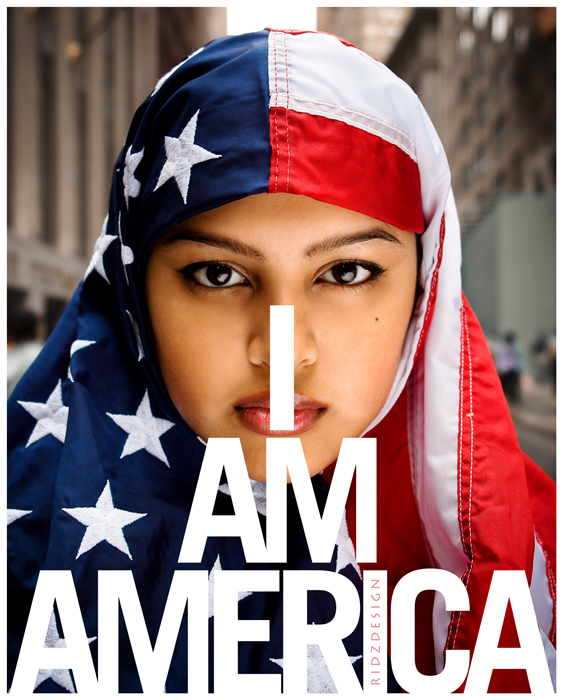
American Muslims are living, breathing reminders that the melting pot does exist, and serves to destroy the prejudices outside of these borders, even in an interconnected society like we have today.

However, attacks like those in Paris always bring out the fear mentioned earlier in the article: "my Muslim neighbor could be a secret extremist".This leads to irrational actions such as wanting to shut down Mosques, stop letting Muslims in and viewing them all as enemies.

The only thing that has allowed our American Muslim community to flourish, as with every religious group before them, is the rejection of those negative ideals. We must always remain vigilant to not fall prey to labeling those who would be our allies against extremism as our enemies, and push them away instead of embracing them.

STRENGTH IN NUMBERS

As with every enemy we have fought in the past, America's strength is our diversity. Consistently, our nation is made up of those who would otherwise possibly be our enemies in times of war - German, Japanese, Russian, etc. This is no different today.

We must embrace this diversity by preserving the very thing that drew these people to us in the first place: our culture. Unlike many countries, our culture doesn't go back thousands of years or have temples to examine.

Instead, American culture is something entirely different. It isn't about shared history, it is about a shared future and a shared promise for a better world.

That is what makes the United States unique and something that, during this crisis, Europe can learn a thing or to from us about. When it comes to integrating people to your country, it isn't about taking care of where they came from. They will take care of that themselves.. All that matters is how you can make their lives better for them and their children.